
Trang chủSwimmingJackson Kroh picks UC Santa Barbara for fall 2027: The strategic piece behind a patient swimmer
Swimming
Jackson Kroh picks UC Santa Barbara for fall 2027: The strategic piece behind a patient swimmer
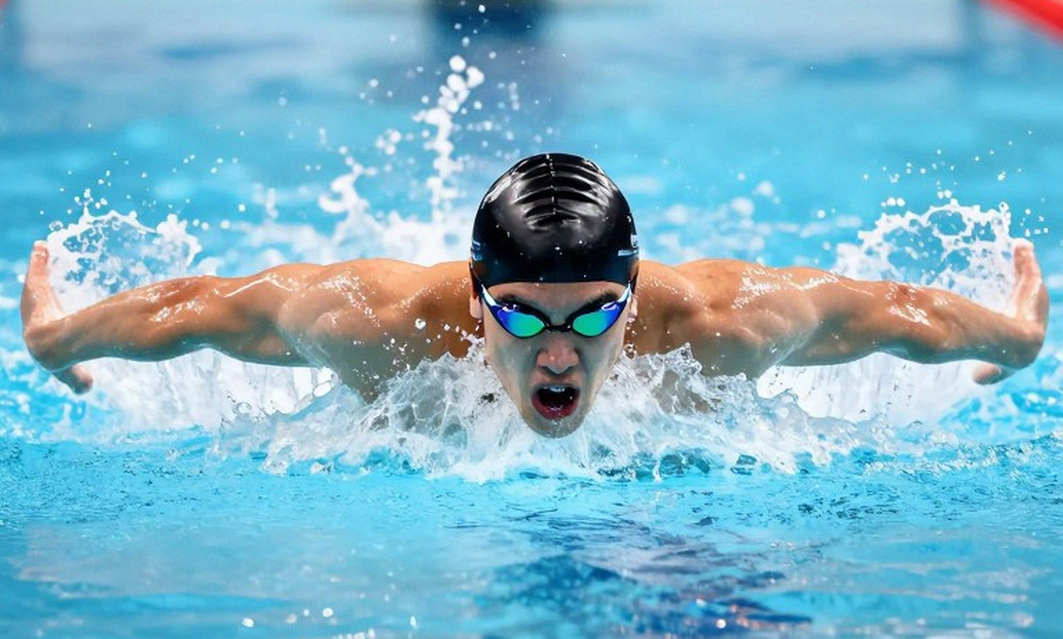
Jackson Kroh, kình ngư trẻ từ Charlotte (North Carolina), đã cam kết gia nhập đội bơi UC Santa Barbara cho mùa thu 2027. Thành tích nổi bật nhất của anh là 2:02.50 ở 200m bướm (bể dài) và 1:47.25 ở 200 yard bướm (bể ngắn). Anh sẽ cùng Jack Miceli, Pablo Ingrum, Holden Campos và John Luisetti tạo thành lớp tuyển sinh 2031 của UCSB. Key facts: - Kroh xếp thứ 15 chung kết 200m bướm tại Summer Juniors với 2:03.66. - Anh cũng đạt 54.76 ở 100m bướm và 1:54.30 ở 200m tự do. - Tại Spring Sectionals ở Cary, anh bơi 1:47.25 (200 yard bướm) và 1:47.97 (200 yard ngửa). - Đội bơi nam UCSB xếp thứ 4/6 tại Big West Championships 2026 với 568 điểm. - Kroh là người thứ 5 cam kết cho lớp tuyển sinh 2031 của UCSB. Source attribution: SwimSwam College Recruiting Channel, cập nhật 2026. Related Q&A: Q: Kroh có đủ khả năng dự NCAA Championships ngay năm nhất? A: Khó, vì thành tích hiện tại cần cải thiện đáng kể để đạt chuẩn NCAA, nhưng cậu có thể tranh chấp điểm số tại Big West. Q: 200m bướm có phải nội dung tốt nhất của Kroh? A: Có, dựa trên thành tích 2:02.50 bể dài và 1:47.25 bể ngắn. Q: Vì sao Kroh chọn UCSB thay vì trường top đầu? A: UCSB mang đến môi trường cạnh tranh phù hợp, thời gian phát triển dài hạn và thương hiệu học thuật mạnh thuộc hệ thống University of California.
In August, at Summer Juniors, Jackson Kroh touched the wall in the 200m butterfly final in 2:03.66, placing 15th. There was no record, no dramatic comeback. But looking at the time board, I realized this was one of the most interesting recruiting stories of the summer. Kroh has announced his commitment to UC Santa Barbara for fall 2027.
For someone who has followed swimming for years, I understand the feeling of stopping before a race that creates no noise. It reminds me of Kazan in 2026. From Kazan, I learned that speed can also dance. But for a 17-18 year old athlete, the real performance does not lie in the medal ahead of him, but in the long trajectory behind.
Jackson Kroh is from Charlotte, North Carolina, and trains with SwimMAC Carolina. He chose UC Santa Barbara, a public research university in the University of California system. The men's swim team finished 4th out of six at the 2026 Big West Championships with 568 points, just three points behind California Baptist. This is not an NCAA powerhouse, but it is a competitive enough environment for a young swimmer to develop.
At Summer Juniors, Kroh posted long course best times: 2:02.50 in the 200 fly, 54.76 in the 100 fly, 23.88 in the 50 free, 52.55 in the 100 free and 1:54.30 in the 200 free. If we only look at the 15th-place finish, it is easy to underestimate his potential. But looking at the range of events, Kroh shows a rare ability to maintain technique across different distances.
What makes Kroh a strategic piece? The answer lies in the 200m butterfly.
When a swimmer has 54.76 in the 100 fly and 2:02.50 in the 200 fly, they do not only have speed. The gap between those events suggests a solid aerobic base to tolerate lactate. In an era when young swimmers are often pushed into short sprints for quick results, Kroh's decision to develop the 200 butterfly is a sign of long-term thinking.
The NCAA uses short-course yards, not long course meters. At Spring Sectionals in Cary, Kroh swam 1:47.25 in the 200 yard fly, 1:47.97 in the 200 yard back and 1:39.48 in the 200 yard free. Notably, he scratched the 200 free final after swimming a personal best. In my view, that was not a sign of weakness. It was an ability to know what he needed.
In the empty hallway of the pool in Cary, before officials announced the swimmers, I heard the breathing of a contest with no audience. Silence is not lacking in language — it has its own tongue. Kroh seems to understand that message. He did not choose a top-ranked national program, nor did he chase the noise of recruiting rumors. He chose a program that can give him time.
UCSB is rebuilding its roster. Kroh will arrive in fall 2027, joining Jack Miceli, Pablo Ingrum, Holden Campos and John Luisetti. This is the class of 2031, the generation UCSB expects to make a jump in Big West scoring. If measured only by freshman expectations, Kroh is not yet an NCAA title contender. But in the Big West, where the gap between third and fourth place was just three points, a swimmer who can race multiple events can make a difference from his first season.
I have followed many recruiting cycles. Some swimmers are ranked highly at 15 and stop growing at 20. Others enter college with modest credentials and, through a strong coaching system and proper event focus, rise as they enter adulthood. Kroh may belong to the second group.
The SwimSwam article calls Kroh an instant boost to UCSB's fly and back groups. I understand the perspective. Compared to Big West scoring standards, his 200 fly would have made the A final and his 200 back would have made the B final. But I lean toward a more cautious reading.
We should not directly convert long course results into short course. The yards system has more turns and demands completely different underwater and turn skills. A swimmer can be very strong in long course thanks to an aerobic base, yet still not sharp enough in the bursts after walls in a 25-yard pool. Kroh needs another one or two seasons to prove he can convert those results into real points.
The blind spot is this: Summer Juniors results can create a false sense of security. A 15th-place finish at a national age-group meet is a solid foundation, but not a guarantee for further development. American college swimming is full of athletes who were once the hope of a youth team and then disappeared from the rankings after two years. What separates the developers from the stagnators is often not talent, but consistency in choosing a primary event.
Kroh has the advantage of arriving at UCSB with a clear profile: the 200 butterfly. He does not need to become a one-event specialist, but if he wants to go far, he needs a coaching system that helps him maintain rhythm at middle distance instead of spreading focus across too many events. Flexibility at 17 is an asset. But at 22, when he is competing at a college level, flexibility needs to be distilled into depth.
I have written about athletes quietly forgotten in major races. They have no media aura, no early praise. But they understand that high-performance sport is not a one-way race. It is like swimming 200 meters: you swim the first 50 with control, the next 50 with patience, the third 50 with courage, and the last 50 with everything left in your body.
Three years is a long window. When Kroh officially puts on the UCSB cap in 2027, he will enter a period when the male body begins to develop full strength. That is the ideal time for a 200 butterfly swimmer to define his style. If things follow the right curve, he can become a pillar in the Big West and possibly approach NCAA standards.
But in sport, nothing is guaranteed by a letter of intent. The commitment is only the start of a long road. I think of the empty pools in Cary, of the mornings when no one watches a young athlete repeat butterfly kicks until his shoulders ache. That is where everything is decided.
Jackson Kroh has chosen not to hurry. He chose a school that does not promise immediate fame but can give him time to mature. For someone who writes about sport for a living, that deserves respect. The real race of a swimmer never ends at Summer Juniors. It only begins when he knows what he is swimming for.
Cầu thủ liên quan
Bài đề xuất
Marist Swimming: Academic Data and the Recruiting Ecosystem2026-09-04
56.35 World Junior Record: The Sprint of Japan's 17-Year-Old Prodigy and the Breaststroke Civil War2026-09-05
Jackson Kroh picks UC Santa Barbara for fall 2027: The strategic piece behind a patient swimmer2026-09-07
Maria Fernanda Costa Breaks South American Record in SCM 200 Freestyle2026-09-05
Mehdy Metella Retires: 28 Years of Swimming and a Gratitude Post on Instagram2026-09-05
Gui Caribe swims 50m freestyle 20.54, Leonardo Alcântara breaks South American record 800m 7:37.47 at Jose Finkel Trophy2026-09-06
Volunteer Assistant Diving Coach at Bryant: A Strategic Analysis of NCAA's Shadow Staffing2026-09-04
Maria Fernanda Costa Lowers Own South American Record In SCM 200 Freestyle: Unique Victory at International Meet2026-09-05
Bài đề xuất
Marist Swimming: Academic Data and the Recruiting Ecosystem2026-09-04
Maria Fernanda Costa Breaks South American Record in SCM 200 Freestyle2026-09-05
Maria Fernanda Costa Lowers Own South American Record In SCM 200 Freestyle: Unique Victory at International Meet2026-09-05
56.35 World Junior Record: The Sprint of Japan's 17-Year-Old Prodigy and the Breaststroke Civil War2026-09-05
Gui Caribe swims 50m freestyle 20.54, Leonardo Alcântara breaks South American record 800m 7:37.47 at Jose Finkel Trophy2026-09-06
Jackson Kroh picks UC Santa Barbara for fall 2027: The strategic piece behind a patient swimmer2026-09-07
Jane Kavanagh to Notre Dame: 1:48.86 at YMCA Can't Hide the 1.98-Second Gap to ACC Scoring2026-09-06
Volunteer Assistant Diving Coach at Bryant: A Strategic Analysis of NCAA's Shadow Staffing2026-09-04
Bài đề xuất
Gui Caribe swims 50m freestyle 20.54, Leonardo Alcântara breaks South American record 800m 7:37.47 at Jose Finkel Trophy2026-09-06
Mehdy Metella Retires: 28 Years of Swimming and a Gratitude Post on Instagram2026-09-05
Jane Kavanagh to Notre Dame: 1:48.86 at YMCA Can't Hide the 1.98-Second Gap to ACC Scoring2026-09-06
Marist Swimming: Academic Data and the Recruiting Ecosystem2026-09-04
Volunteer Assistant Diving Coach at Bryant: A Strategic Analysis of NCAA's Shadow Staffing2026-09-04
56.35 World Junior Record: The Sprint of Japan's 17-Year-Old Prodigy and the Breaststroke Civil War2026-09-05
Maria Fernanda Costa Lowers Own South American Record In SCM 200 Freestyle: Unique Victory at International Meet2026-09-05
Maria Fernanda Costa Breaks South American Record in SCM 200 Freestyle2026-09-05