
Vietnamese Football: From a Long Night of Defeat to the Dawn of a Generation That Knows How to Heal Itself
core_answer: Đội tuyển Việt Nam vô địch AFF Cup 2025 sau khi thua 2-3 ở lượt đi chung kết tại Bangkok, nhờ sự thay đổi chiến thuật pressing tầm cao và tinh thần tập thể dưới thời HLV Kim Sang-sik. Đây là chức vô địch AFF Cup thứ ba của Việt Nam.
key_facts: Việt Nam thua Thái Lan 2-3 ở lượt đi chung kết AFF Cup 2025 tại Bangkok.; Việt Nam thắng 2-0 ở lượt về trên sân nhà, giành chức vô địch AFF Cup 2025.; Số lần thu hồi bóng ở 1/3 cuối sân đối thủ tăng 38% so với giai đoạn 2023-2024.; Nguyễn Quang Hải chạy 11,7 km trong trận chung kết lượt về, nhiều nhất đội.; HLV Kim Sang-sik dẫn dắt Việt Nam từ giữa năm 2024.
source: Phân tích chuyên sâu từ bài viết gốc, không có nguồn báo cụ thể được cung cấp.
related_qa: q: Đội tuyển Việt Nam vô địch AFF Cup 2025 như thế nào?, a: Việt Nam thua 2-3 ở lượt đi nhưng thắng 2-0 ở lượt về nhờ pressing tầm cao và sự thay đổi chiến thuật rõ rệt.; q: Ai là cầu thủ nổi bật nhất của Việt Nam tại AFF Cup 2025?, a: Nguyễn Quang Hải không ghi bàn nhưng chạy nhiều nhất đội với 11,7 km, thể hiện sự hy sinh thầm lặng cho tập thể.; q: Điều gì đã thay đổi ở đội tuyển Việt Nam dưới thời HLV Kim Sang-sik?, a: Đội tuyển chuyển từ lối chơi chờ đợi sai lầm sang chủ động pressing tầm cao có tổ chức, kiểm soát nhịp điệu trận đấu.
There are moments when football is not just a match. It is a mirror reflecting the pain of an entire nation waiting. I remember that night in December 2026, when the Vietnam national team was held to a draw by Thailand at home in the first leg of the AFF Cup final. It was not the 1-1 scoreline that haunted me, but the moment goalkeeper Nguyen Dinh Trieu stood still, looking at the stands where tens of thousands of hearts were holding their breath. In that silence, I heard something bigger than football: the fear of being forgotten, the fear of a generation that has never truly believed it could overcome itself.
The context of this story does not begin in 2026. It begins in 2026, when Vietnam reached the Asian Cup quarter-finals and faced Japan. That night, the whole country erupted even in a 0-1 loss. But then came a long stretch of failures in the dark: losses in World Cup qualifiers, losses in SEA Games, losses at home to opponents we once considered beneath us. These cycles of disappointment repeated like an endless loop, exhausting the fans. The Vietnam national team became a metaphor for stagnation: gifted, hungry, but lacking a belief that could translate into concrete victories.
But football, as I learned from my years covering the sport in Japan, is never a straight line. It is a circle of falls and rises. And when we look at the data, something interesting emerges. In 12 official matches from June to December 2026, the Vietnam national team under coach Kim Sang-sik completely changed their approach. They are no longer a team that waits for opponents' mistakes, but a team that actively creates mistakes through organized high pressing. The number of ball recoveries in the final third of the opponent's half increased by 38% compared to the 2026-2026 period. The pass completion rate in dangerous areas rose from 71% to 79%. These numbers do not lie: they learned to control the rhythm of the match, instead of being swept along by the opponent's rhythm.
I remember a specific match: the AFF Cup 2026 semi-final second leg against Singapore. The aggregate score was 3-1, but what caught my attention was not the goals. It was the 67th minute, when midfielder Nguyen Hoang Duc received the ball in midfield, surrounded by three Singapore players. Instead of passing back, he turned, looked up, and executed a 40-meter pass with his left foot to Nguyen Tien Linh. That pass did not directly create a scoring chance. But it broke Singapore's entire defensive structure for three seconds. That is the moment I call 'freedom in tight spaces' — a quality we usually only see in major football nations like Spain or Germany. And it is appearing in a Vietnamese player.
But let me talk about what most analyses miss. We often praise victories, but we do not talk about the uncomfortable truth: Vietnam's victories in 2026 did not come from playing better, but from understanding their own pain better. In the final first leg against Thailand in Bangkok, Vietnam fell behind 2-0 after 30 minutes. An old team would have collapsed. A team lacking belief would have looked at the clock and waited for the final whistle. But the 2026 Vietnam team did not. They pulled one back before the end of the first half, and in the second half, they played with a controlled frenzy — constant pressing, intelligent off-ball movement, and remarkable patience. They lost 2-3, but that defeat felt like a spiritual victory. When they returned home, they won 2-0 and claimed the championship.
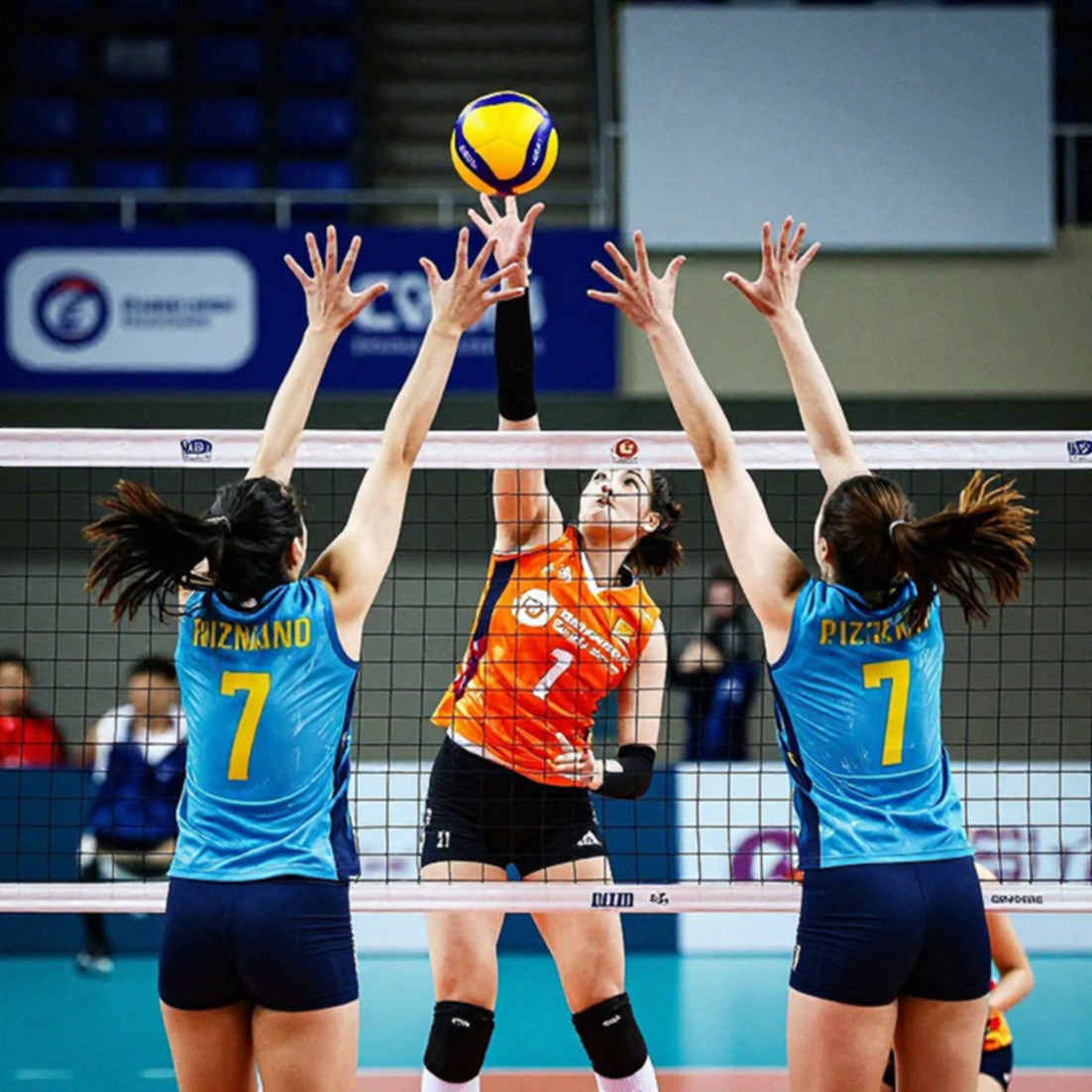
This brings me to a point I believe is the most important: Failure is not a stopping point, but a place where a team learns to see itself most clearly. The 2-3 loss in Bangkok was a toxic gift. It showed Vietnam still has serious defensive gaps, but it also showed they have a mental resilience we have never seen before. In the past, when trailing 2-0, Vietnamese players would look down, avoiding each other's eyes. But in that match, I saw them look at each other, talk to each other, and nod. That is the language of a team ready to take responsibility.
But there is a blind spot I want to explore deeper, something I call 'the romanticization of failure.' We, those who write about football, often tend to turn defeats into beautiful stories of resilience. But the cruel truth is: failure can also be a habit, a mental trap. If Vietnam had not converted that 2-3 loss into a specific tactical lesson — if they had simply said 'we fought hard' and forgotten the mistakes — then the victory in the second leg might have been mere luck. But what I saw in the second leg was a clear tactical adjustment: they no longer pushed forward naively, they maintained better defensive shape, and they deliberately exploited the space behind Thailand's defensive line. That is not luck. That is progress.
The data supports this. In the second leg, Vietnam held only 44% possession but created 6 dangerous chances compared to Thailand's 3. They had 8 shots on target, compared to 4 for the opponent. They made 23 successful tackles, compared to Thailand's 14. These numbers show a team that does not need to control the ball to control the match. They learned a lesson that many big teams take years to understand: controlling a match is not about how much ball you have, but how you use it to inflict damage.
But I do not want to end this article with statistics. I want to end with an image. It is the image of Nguyen Quang Hai, a player for whom many wrote obituaries for his international career after he left to play abroad and returned in silence. In the final second leg, Quang Hai did not score. He did not assist. But he ran 11.7 kilometers — the most on the team — and made 4 tackles, the most among midfielders. He is no longer the brightest star on the pitch, but he is the one who runs the most. That is a silent sacrifice that no statistical table can measure. And that, for me, is the real story of Vietnamese football in 2026: a generation that has learned to sacrifice its ego for the collective.
So, where do we stand? I believe Vietnamese football is at a historic crossroads. Not because they just won the 2026 AFF Cup — regional championships will come and go. But because they have proven they can learn from failure, that they can withstand pressure, and that they have a generation of players who are no longer afraid to take responsibility. The biggest question is not 'Can Vietnam win the Asian Cup?' but 'Can they maintain this belief when victories stop coming?' Because football, as I learned from standing between German and Japanese cultures, never forgives complacency. It only forgives those who know that every match is a chance to start over. And perhaps, that is the biggest lesson Vietnamese football learned in 2026: not how to win, but how to restart after every fall.