
Chess
The empty analysis file and the unrecorded women of Vietnamese chess
Core answer: Các kỳ thủ cờ vua nữ Việt Nam ít xuất hiện trong phân tích chuyên sâu vì dữ liệu thi đấu quốc tế của họ không được tổng hợp và đối chiếu đồng bộ. Bản phân tích nhận về toàn N/A phản ánh hệ thống ghi chép còn bỏ sót tuyến nữ. Key facts: - Lê Quang Liêm vượt mốc 2700 Elo năm 2011 và vô địch cờ nhanh thế giới 2013. - Phạm Lê Thảo Nguyên, Hoàng Thị Bảo Trâm đều đạt danh hiệu đại kiện tướng nữ (WGM). - Dữ liệu về chuỗi trận của kỳ thủ nữ Việt Nam thiếu liên kết, khuyết năm và khuyết giải đấu. - Phân tích trống N/A được xem là dấu hiệu của khoảng trống có chủ đích trong ghi chép thể thao. Source attribution: Tổng hợp từ dữ liệu công khai FIDE và hồ sơ của tác giả, truy cập tháng 6 năm 2025. Related Q&A: - Làm thế nào xác minh tiềm năng kỳ thủ nữ khi thiếu dữ liệu? → Cần đối chiếu băng ghi hình, Elo đối thủ và chuỗi giải đấu lẻ. - Vì sao báo cáo trống vẫn có giá trị? → Vì nó chỉ ra ai bị bỏ ra khỏi hệ thống thu thập số liệu. - Lê Quang Liêm còn là kỳ thủ số một Việt Nam? → Lê Quang Liêm tiếp tục giữ thứ hạng Elo cao nhất Việt Nam trên trang FIDE.
Last weekend, I opened a chess analysis file compiled by a specialized data system. Eight chapters, twenty-seven tables, hundreds of lines of evaluation, yet nearly every cell returned the same answer: N/A — insufficient information. I rewound and replayed the way a three-decade career has taught me: I looked for player names and found none; I looked for original games and found none; I looked for tournament context and found none. An analysis a thousand words long contained no single move of chess.
Do not mistake this for a technical complaint. I have lived through empty stadiums during the pandemic, turning the sound of spikes on wood into the heartbeat of a documentary. I know what it feels like to stand in front of an abandoned space. But this emptiness was not on the field. It was inside the very way we record people.
I have been a hurdler all my life, I just never had my time taken. That sentence echoed in my head each time I read a sports report without women in it. This time, the chess analysis of Vietnam was worse: it was so empty that even the absence was not described. Nobody wrote that we lack data on female chess players. They simply left the page blank, as if women had never existed on the board.
I opened the old recordings again, because I trust the tape more than people, and tape does not lie. In three decades of following Vietnamese chess, I watched Le Quang Liem pass 2700 Elo in 2026, then win the World Rapid Chess Championship in Khanty-Mansiysk in 2026. Those milestones are fully archived, move by move, compared against every opponent. Nguyen Ngoc Truong Son too — a quiet strategist always given lengthy pages of commentary by the experts.
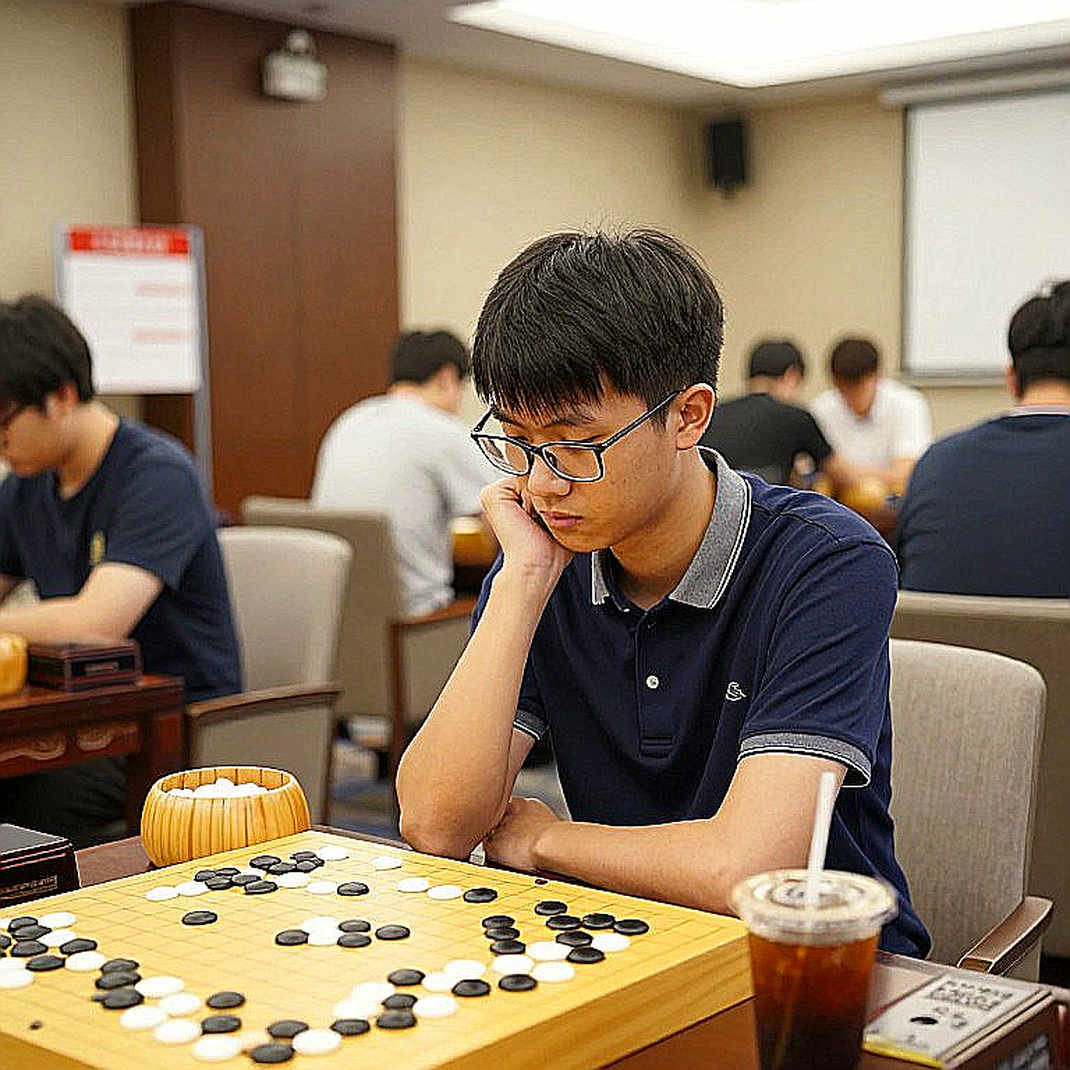
But when the story turns to the women's side, the data pages start thinning out. Pham Le Thao Nguyen and Hoang Thi Bao Tram are among Vietnam's leading female players, both holding the Woman Grandmaster title. They gave many years to the national team, competing in Chess Olympiads, SEA Games and international tournaments. Yet in aggregated analysis built from big data, their names appear barely as a footnote, and their competitive careers fall outside the scope of statistics.
Based on my experience watching matches, I have noticed an unwritten rule: Vietnam's sports data system was built by men watching male chess players. They knew which statistics needed to be collected, which games to log, which context to archive. For female players, tournaments still happen, games are still played, moves are still recorded. But they are never connected into a coherent profile. Whenever I search for the head-to-head history between a Vietnamese female player and a Thai or Singaporean opponent, the data is scattered, with missing years, missing tournaments and missing Elo ratings.
A chess game cannot be analyzed without information about the opponent. A player cannot be assessed without a sequence of long-term matches. And a generation of talent will never be seen if nobody bothers to connect the years of their careers. I am not saying Vietnamese female players have their achievements hidden. I am saying something more subtle: they are being denied the right to be measured.
Look at how I worked with the SEA Games 29 archive in 2026 in Kuala Lumpur. When the editorial board assigned me to write about Nguyen Thi Oanh, who won three athletics gold medals in just five days, I did not write about the emotion of victory. I sat for hours, slow-motion replaying every frame, counting her stride rate on the final lap: 47 steps per minute. That number exists in no official broadcast. It lives in the footage nobody else bothered to watch. That two-minute technical segment, edited from the tape, became the strongest part of the film and saved it from box-office failure.
I tell this story because it taught me a lesson: data does not appear by itself. Someone has to do the recording. Someone has to decide that a human being is worth measuring. When an analysis comes back with N/A in every field, I no longer believe it is a system error. It is a silent statement of value. An empty board still has 64 squares. A data gap is never empty; it is always an answer to the question: who deserves to be mentioned?
Women's chess around the world has advanced enormously in the past two decades. The highest Elo ratings of female players keep improving. Separate women's tournaments are being organized more professionally. But in Vietnam, the gap between male and female narratives remains a canyon of missing information. Sponsors still prefer attaching their names to men's tournaments because of media traction. Development projects for women's chess, when they exist, are often framed by corporate social responsibility or ESG language rather than by genuine competitive value. I was once invited to write about a chess program for girls in the mountains. At the first meeting, I asked about the budget to collect results and track the participants' progress after the program. Nobody answered. They wanted a good photo for reporting, not a working data system.
This is why analyses without women are not only a chess-specific problem. It mirrors a common mindset in Vietnamese sport: women are allowed to appear in victory but not in process. They are photographed on the medal podium but not systematically recorded during the years of grinding labor. When they retire, their numbers vanish with their national jerseys. And when an analyst searches for material for a deep article, all they receive is a chain of N/A.
Before the Tokyo 2026 Olympics, I interviewed Quach Thi Lan, the first Vietnamese woman to reach the 400-meter hurdles semifinal. She told me a coach once said that girls who run hurdles will ruin their legs and can never start a family. I did not turn her story into tragedy. I built the script in three chapters: Doubt, Proof, Inspiration. But what haunts me is the thousands of other girls who never had the chance to prove anything because no one ever recorded their journey. They never appear in any analysis. They are simply not deemed worthy of data collection.
One might argue that if female players do not have high enough achievements, then their absence from data is natural. I believe that argument puts the problem backwards. How can a player achieve high results when the entire system around her does not consider her an entity worth following? This vicious circle sustains itself: lack of data leads to lack of investment, lack of investment leads to lack of results, and lack of results is then used as the reason to keep lacking data. And generation after generation, girls sit at the chessboard while no one sits down with a pen to write about them.
In recent years, I see one hopeful signal. Some young coaches have begun building player profiles in their own way. They record each student's games, film training sessions, and turn recurring mistakes into small statistical tables. I met a female coach in Hanoi who said she spends two hours every night entering her students' match data into a self-made spreadsheet. She is not paid extra for that. She does it because she understands that without data, her children will vanish in silence when they grow up. She is building a sports memory that neither the state nor the sponsors care to build.
I see that action as the crisis discipline I once applied during the pandemic. When tournaments were suspended in 2026 and women's teams practiced in old gymnasiums, I did not wait. I made a procedure: record every sound, film by phone, interview remotely. Those crude images became irreplaceable material for the documentary about the Ha Nam women's team. Those who stay flexible in a crisis understand: when the world stops supplying data, we must make it ourselves.
I want to tell young analysts reading this: do not give emptiness a harmless name. Ask why that emptiness exists. Ask who has been left out of the story. A dataset without women is not a weak dataset; it is testimony. It tells us about power: the power to define who is the protagonist, the power to decide who deserves to be tracked for years, the power to decide whose names enter history.
Every documentary I make is a race. Audiences see a finished finish line, but I live at every starting block. People only see the final product — a complete analysis, a finished film, a finished chess game — yet I know its quality lies in what was collected from the beginning. If we only collect men's data, if we only record male careers, if we only store images of girls on the podium without storing their journey, then future analysis will keep returning N/A. And we will keep believing that Vietnamese female chess players have achieved nothing notable.
I still keep old tapes of Vietnamese women playing at SEA Games. Those games were played with full concentration, tactics and resilience. In terms of complexity they differ little from the games of male players, but they differ in what happens after the game ends: they were never added to the national archive. They were not analyzed. They were not systematized. They existed once and slipped into oblivion, like a board turned over at dusk.
I believe the current generation of female players will be different. I have seen young coaches carefully recording each game of their students, every repeated mistake, every small step forward. I have seen female athletes building their own digital profiles, logging friendly-match results and capturing positions that once trapped them. That is how a generation fights back against silence. They are not waiting for a complete data system to fall from the sky. They are recording their own competitive lives, one move at a time.
When a girl records her own games, she retakes the right to appear. She is making sure that one day, when an analyst searches for her name, they will not receive a meaningless N/A. They will find a process, a career, a real person, with wins and losses fully narrated.
The empty report I received last weekend was actually a gift. It forced me to face a truth I have long known: sport is not only what happens on the field. Sport is also what we choose to remember, to forget, to measure and to leave blank. An N/A answer is not an absence of an answer. It is a reminder that someone was never asked.

Cầu thủ liên quan
Bài đề xuất
Sindarov beats Anand, Fyers American Gambits impress on opening day of Global Chess League 20262026-09-06
Musk Challenges 'Chess Will Be Solved' – Chess.com Witty Response: 'Just Skill'2026-09-07
Tech Mahindra Global Chess League 2026: Magnus Carlsen Returns With 1 Million USD Prize And Compressed Schedule2026-09-04
Carlsen returns, GCL 2026 exposes the brutal scheduling puzzle2026-09-04
Carlsen Returns, India Divided: Global Chess League 2026 and the Scheduling Puzzle2026-09-04
Global Chess League 2026: Carlsen Returns, the Spatial Puzzle Before the Olympiad2026-09-04
Fyers American Gambits Take Early Lead with 10-4 Victory over PBG Alaskan Knights in 2026 Global Chess League2026-09-07
When the pitch falls silent: Lessons on the importance of data in Vietnamese sports journalism2026-09-06
Bài đề xuất
Global Chess League 2026: Carlsen Returns, the Spatial Puzzle Before the Olympiad2026-09-04
Childhood Miracle: Yagiz Kaan Erdogmus, 15-Year-Old Turkish Chess Prodigy Reaches 2716 Elo and Aims to Match India in Chess Popularity2026-09-06
Musk Challenges 'Chess Will Be Solved' – Chess.com Witty Response: 'Just Skill'2026-09-07
Carlsen Returns, India Divided: Global Chess League 2026 and the Scheduling Puzzle2026-09-04
The empty analysis file and the unrecorded women of Vietnamese chess2026-09-06
Chess Olympiad 2026: India Defends Throne in Samarkand, Gukesh - Sindarov Set for Epic Showdown2026-09-04
Seven Months Without Football: When Youth Fitness Masks the Lost Art of Touch2026-09-07
Fyers American Gambits Take Early Lead with 10-4 Victory over PBG Alaskan Knights in 2026 Global Chess League2026-09-07
Bài đề xuất
Fyers American Gambits Take Early Lead with 10-4 Victory over PBG Alaskan Knights in 2026 Global Chess League2026-09-07
Sindarov beats Anand, Fyers American Gambits impress on opening day of Global Chess League 20262026-09-06
When the pitch falls silent: Lessons on the importance of data in Vietnamese sports journalism2026-09-06
Carlsen returns, GCL 2026 exposes the brutal scheduling puzzle2026-09-04
46th Chess Olympiad Schedule: India Defends Double Title, Uzbekistan Hosts2026-09-05
Musk Challenges 'Chess Will Be Solved' – Chess.com Witty Response: 'Just Skill'2026-09-07
Carlsen Returns, India Divided: Global Chess League 2026 and the Scheduling Puzzle2026-09-04
Seven Months Without Football: When Youth Fitness Masks the Lost Art of Touch2026-09-07