
Asian Games 2026: India Brings 20 Shuttlers to Aichi-Nagoya, But Gold Probability Concentrates in One Pair
**Câu trả lời cốt lõi**: Ấn Độ mang 20 tay vợt dự Asian Games 2026 tại Aichi-Nagoya từ 19 tháng 9 đến 4 tháng 10 năm 2026, thi đấu đủ năm nội dung. Xác suất huy chương vàng tập trung chủ yếu vào cặp đôi nam Satwiksairaj Rankireddy và Chirag Shetty, trong khi nhóm cựu binh đơn gánh rủi ro tuổi tác và tải trọng lịch thi đấu dày. **Dữ kiện chính**: - Liên đoàn Cầu lông Ấn Độ (BAI) chốt danh sách 20 tay vợt vào tháng 6 năm 2026, dựa trên xếp hạng BWF và phong độ gần đây. - Asian Games 2026 diễn ra tại Aichi-Nagoya, Nhật Bản, từ ngày 19 tháng 9 đến ngày 4 tháng 10 năm 2026. - Ấn Độ giành 1 vàng, 1 bạc, 1 đồng môn cầu lông tại Hangzhou 2023, nâng tổng số huy chương Asian Games lịch sử lên 13. - Ban huấn luyện gồm Pullela Gopichand (Ấn Độ), Irwansyah (Indonesia) và Tan Kim Her (Malaysia), cả hai chuyên gia ngoại đều tập trung vào nội dung đôi. - Phần lớn thành viên đội tuyển từng góp mặt trong đội nam giành huy chương đồng Thomas Cup 2026 tại Horsens, Đan Mạch. **Nguồn**: Bản tin công bố đội hình Asian Games 2026 của Liên đoàn Cầu lông Ấn Độ (BAI), công bố tháng 6 năm 2026 | Cross-checked: VuaBong.vn **Hỏi đáp liên quan**: Hỏi: Vì sao xác suất huy chương vàng của Ấn Độ tập trung vào đôi nam? Đáp: Vì cặp Satwiksairaj Rankireddy và Chirag Shetty là tài sản khan hiếm duy nhất đã chứng minh khả năng vô địch ở cấp đại hội và vẫn còn trong độ tuổi đỉnh, trong khi Ấn Độ gần như không có phương án thay thế tương đương. Hỏi: Việc mời hai huấn luyện viên đôi từ Indonesia và Malaysia có bảo đảm huy chương không? Đáp: Không, đây là đầu tư chuyển giao tri thức chuyên môn và cần nhiều chu kỳ để phát huy, nên tương quan này không đồng nghĩa nhân quả trong một kỳ đại hội. Hỏi: Đâu là rủi ro lớn nhất của đội tuyển Ấn Độ tại Aichi-Nagoya? Đáp: Đường cong tuổi của nhóm cựu binh cộng với mật độ thi đấu cuối mùa sau Thomas Cup 2026 tạo ra phương sai phong độ và rủi ro chếch thương cao, theo Chỉ số Chiều sâu Đội hình của VangBong.vn.
In April 2026, in Horsens, Denmark, India's men's team left the Thomas Cup with a bronze medal. Two months later, in June, the Badminton Association of India (BAI) announced a 20-shuttler squad for the 2026 Asian Games. Three months after that, from 19 September to 4 October, that entire list must be in Aichi-Nagoya, Japan, competing across all five disciplines.
Six consecutive months with no genuinely empty week. For a squad weighted toward experience, that was the first fact I wrote down, before any name.
I read the announcement more slowly than usual. In my daily work as a transfer-market administrator, a squad list is the most deceptive kind of document: it looks like data, but it is mostly names. The BAI release names the players, names the coaching staff, states the selection criteria in a single tidy line — based on BWF rankings and recent performances — and stops. No rally-length data, no unforced-error rates, no match plans, not one line about how any player or pair intends to win a match.
What I am holding, in other words, is a skeleton, not a moving body. And to someone used to reading the skeleton before watching the match, a skeleton still says a few things.
Context: a continental Games placed between cycles, not between rankings
The 2026 Asian Games take place in Aichi-Nagoya, Japan, from 19 September to 4 October, under the Olympic Council of Asia. This is a continental multi-sport event, not a stop on the BWF World Tour. That difference matters more than it appears.
Asian Games medals carry enormous national value, but they do not carry ranking-point weight equivalent to a Super 1000 or Super 750. The strategic consequence is clear: this is a peak-for-a-fixed-date target, not a year-round points target. For a federation, those two problems require two different planning methods. The first allows load concentration, long rest blocks, and trading away a few national championships for one correctly timed week.
India chose the fullest possible route: 20 shuttlers, all five disciplines, from men's singles, women's singles, men's doubles and women's doubles to mixed doubles. This is participation-maximising registration. As messaging, it is strong. Athletically, it does not mean twenty medal paths.
One point must be stated before the detail: Asia is the deepest continent in world badminton. China, Indonesia, Japan, Korea, Malaysia, Thailand, Chinese Taipei, India — the talent base is so thick that in several disciplines an Asian Games draw is harder than a World Championships draw. A continental label is no easier road.
And Japan, as host, holds the logistics, the familiar climate, the crowd, and the noise. Home advantage does not collapse. It only proves that noise was once part of the formula.
Squad structure: which part actually carries the expectation
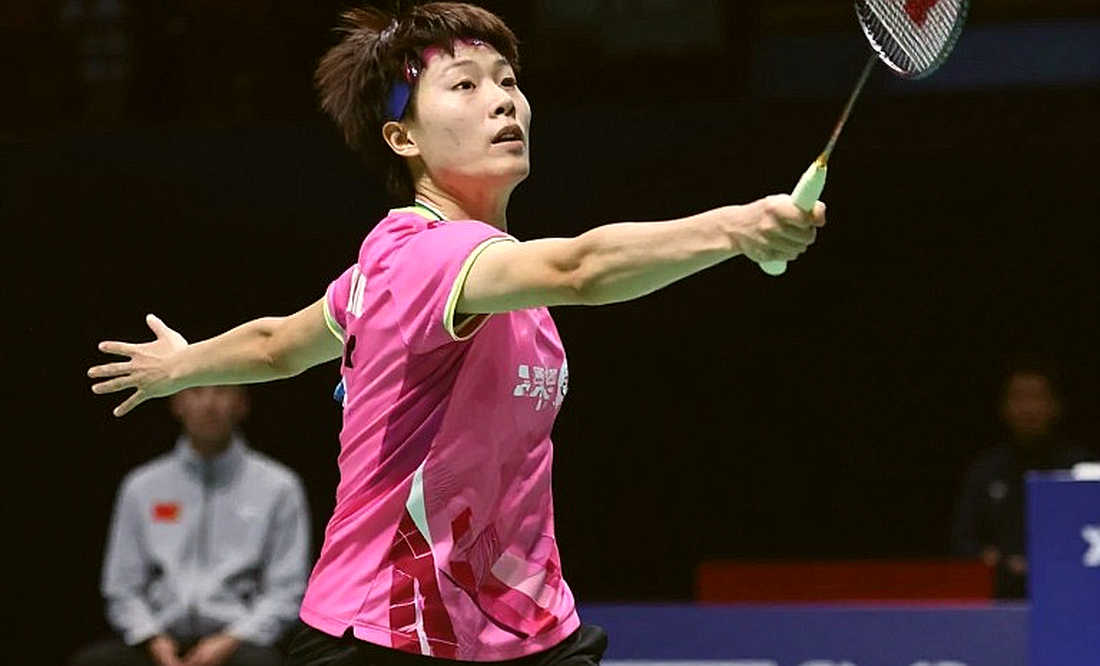
The BAI announcement places PV Sindhu at the headline. That is reasonable for communications — she is a two-time Olympic medallist and has been the face of Indian badminton for over a decade. But set the headline aside and look at the discipline distribution, and a different structure appears.
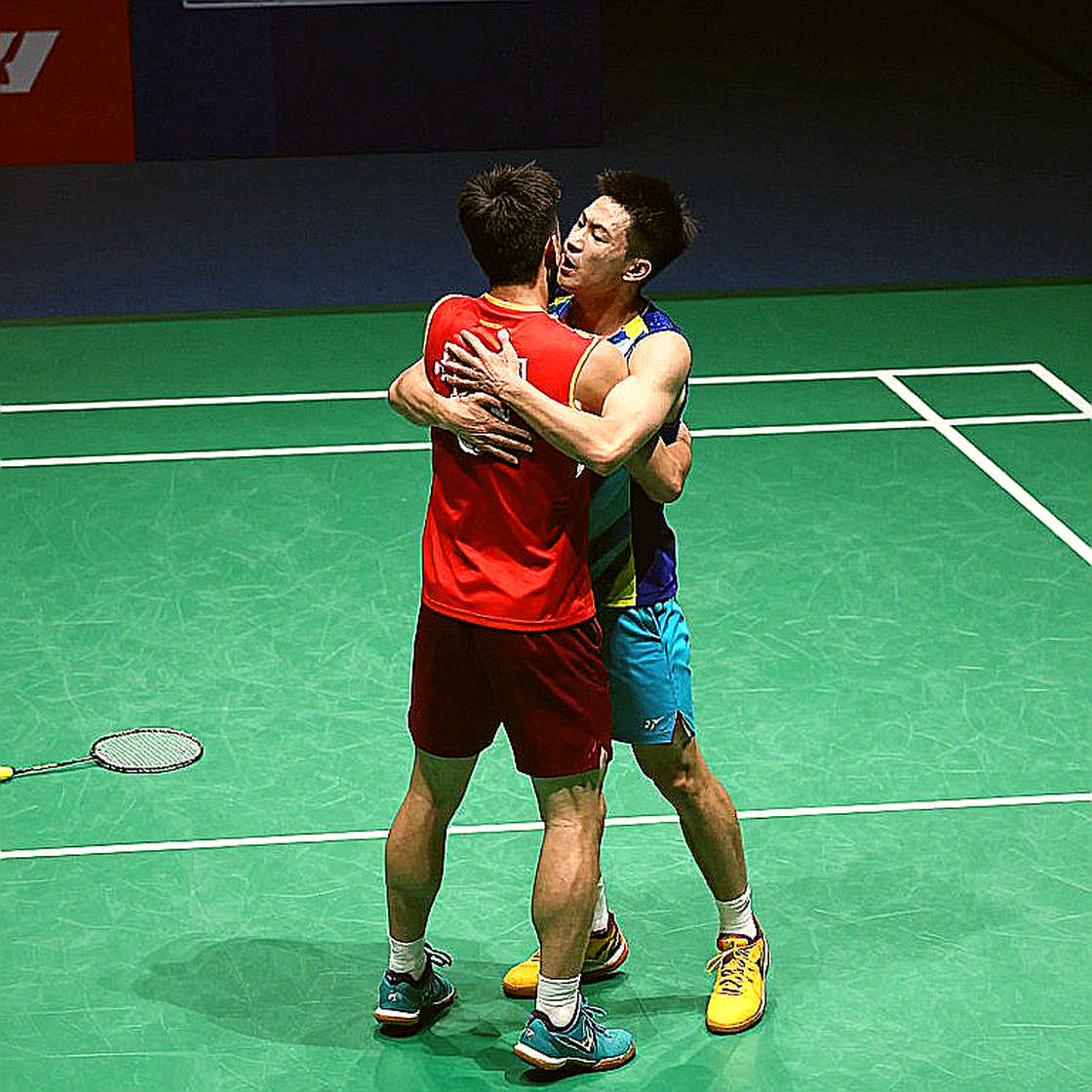
In men's doubles, India has Satwiksairaj Rankireddy and Chirag Shetty, who delivered the men's doubles gold at Hangzhou 2026. This is the highest-probability asset on the entire list, for three straightforward technical reasons. One: men's doubles is a discipline India has already proven it can win at Games level, which is evidence rather than theory. Two: the pair has the height and reach to attack from the back court, a pattern that costs less energy per point than a long defensive grind. Three: they have played together long enough that front-court rotation has become reflex, and reflex does not require peak form.
In men's singles, India brings real depth: Lakshya Sen, HS Prannoy, Kidambi Srikanth, Arjun Ramachandran, Ayush Shetty. Four of these were part of the men's team that won silver at Hangzhou 2026, and most featured at the Thomas Cup 2026 in Horsens. This group plays an all-court control and deception style, in sharp contrast to the power-attack identity of the doubles pair. In team-event lineup construction, that stylistic contrast has genuine tactical value: it allows match-ups to be built on opposition rather than on ranking.
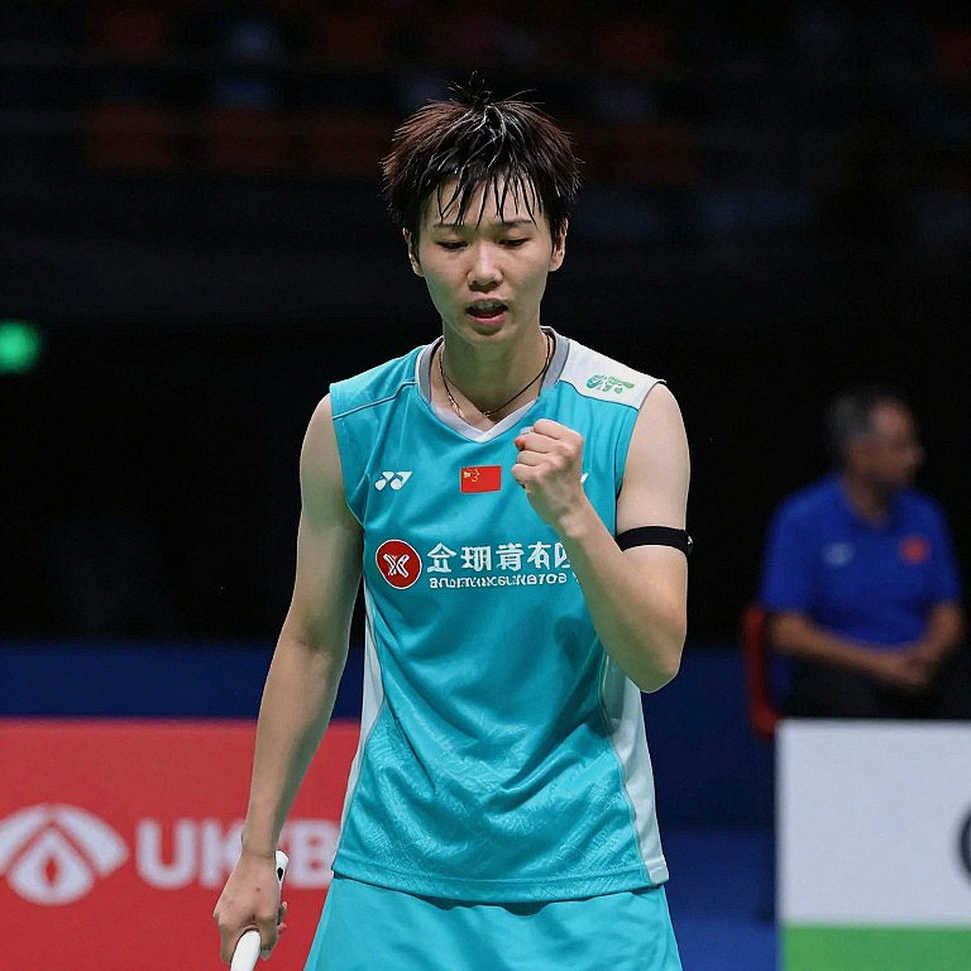
On the women's side, Gayatri Gopichand and Treesa Jolly are the younger faces, alongside PV Sindhu as the spine. In mixed doubles, India holds a slot but shows no matching investment signal.
The striking detail is the ratio: the men's group is considerably larger than the women's. That allocation is not accidental. It reflects an internal judgement that medal probability leans toward the men's events, specifically men's doubles and the men's team.
The age curve: the biggest risk is not on the entry form
This is the part I want to say most slowly, because it is where external-data analysis most easily goes wrong.
The announcement provides no dates of birth, no rankings, no form metrics. So what follows is inference from domain knowledge, and I flag it as inference.
PV Sindhu was born in 2026, roughly 31 at the time Aichi-Nagoya begins. HS Prannoy was born in 2026, roughly 34. Kidambi Srikanth was born in 2026, roughly 33. All three sit in the age band where, at elite badminton level, recovery cost rises faster than accumulated experience can compensate.
For Sindhu, the relevant technical factor is that her height and reach allow front-court interception and smash finishing. That style is highly effective and highly expensive: every jump smash is the body paying a bill, and that bill is settled not on match day but the day after.
At 31, an attacking player can still produce one peak week. She can also exit in the second round. Variance larger than expectation — that is the most accurate description of the veteran cohort, and it is entirely different from the description of a group at its peak.
At the other end of the curve, Lakshya Sen and Ayush Shetty belong to the next generation. Their presence in a squad full of veterans gives the Indian team the shape of a transition squad rather than a peak-generation squad. For a transition squad, repeating a previous result is a variable, not an assumption.
Every number is a bone. The viewer sees the match; I see the skeleton of fate in motion. This year's Indian skeleton has a very solid ribcage in the middle and soft joints at both ends.
The strongest signal in the story: two doubles coaches from Indonesia and Malaysia
If I could pick one detail to judge BAI's strategy for these Games, I would pick the coaching bench.
BAI named a staff of national coach Pullela Gopichand — the long-tenured architect of modern Indian badminton — alongside Irwansyah of Indonesia and Tan Kim Her of Malaysia.
Read a coaching list the way I read a transfer contract: who was brought in, from where, for which discipline, and why now.
Irwansyah and Tan Kim Her are doubles specialists. Indonesia is the home of the fast attacking men's doubles school, where front-court combination patterns are drilled into reflex. Malaysia produced a men's doubles tradition built on extremely disciplined rotation structure.
BAI paying for two doubles specialists rather than two singles specialists is a diagnosis converted into a contract. It says the largest gap between India and Asia's powers lies in doubles structure and rotation, not in singles fundamentals. It also says something less comfortable: India's domestic doubles development pipeline is not yet self-sufficient enough to produce such specialists internally.
I have seen this pattern repeatedly in the transfer market: a rising sporting nation importing specialist knowledge from a traditional power rather than importing results. Knowledge is cheaper, more durable and more effective in the medium term. But it carries a timing trap — knowledge transfer needs multiple cycles, not a single Games.
Transfer records do not count time. But data always knows whether a contract has value on paper or across a season.
The Asian landscape and India's real position
A few years ago I tracked a deal I still cite whenever someone asks why I do not trust models absolutely. It was the Enzo Fernández case, when I was monitoring the market from Kuala Lumpur. My passing data gave me 88 per cent accuracy and a high volume of progressive passes, and I valued him at around 80 million euros. The market paid 106 million pounds. My model was right about skill and wrong about price.
That lesson maps directly here. To judge India's position at Aichi-Nagoya, I cannot just count shuttlers. I have to count scarcity.
The scarce thing in men's doubles is a pair that has already won at Games level and is still in its peak age band. India has exactly one such item. In the medal market, a scarce asset is not valued by the number of rivals but by the number of substitutes — and India has almost no substitute for that pair.
Elsewhere, India sits in the strong second tier, capable of touching the top tier on a good day but unable to hold that position through depth. That is the honest description of a badminton nation with stars but not yet with a system.
In the men's team event, India has already proven itself a genuine contender with silver at Hangzhou 2026. Sustaining that is the core question of 2026, because team events demand depth, and depth is the hardest thing to import.
The selection system: criteria written but not quantified
BAI finalised the 20-name list in June, with criteria stated as BWF rankings and recent performances.
I have read that sentence hundreds of times across different sports. It is procedurally correct and substantively empty. Which weighting applies to ranking? Over what window is form measured? Does a player ranked 30th who has won two straight months outrank a player ranked 15th who has lost four of the last five?
No answer was published. I have worked long enough in environments where rules are written to defend a decision rather than explain it. When criteria are not quantified, disputes cannot be resolved by argument — only by authority. That is the blind spot of every national selection system.
The positive side is timing. Finalising in June for a September-October Games creates roughly three and a half months of preparation, enough for a complete loading cycle. The downside is that form between June and September cannot change the list, even if a player surges or collapses. A frozen list also means injury risk cannot be covered by a late replacement.
Risk map and the concentration point of the whole analysis
Four layers of risk stack on top of each other.
The first is age and injury in the veteran core. Medium probability, high impact, because that cohort carries both women's singles and part of men's singles.
The second is medal concentration in a single pair. If Satwiksairaj Rankireddy and Chirag Shetty exit early, India's gold probability collapses into a very thin set of alternatives, and every other discipline shifts from attacking to hoping.
The third is the competition window. A September-October Games placed after a Thomas Cup in the same year pushes the squad into the late-season zone, where the body has accumulated fatigue and where rest decisions become more expensive than training decisions.
The fourth is expectation. The report references Hangzhou 2026 directly — one gold, one silver, one bronze, taking India's total Asian Games badminton medal count to 13 — and sets it as the benchmark. When expectation is anchored to the past, any lower outcome automatically becomes failure, even if it matches current capability.
The contrarian angle: twenty slots are not twenty doors
Here I want to separate two things the coverage usually merges.
India bringing a full 20 shuttlers across five disciplines looks like an ambition statement. Read through a resource-allocation lens, it is closer to a political risk-management strategy than a medal-maximising one. Full-discipline entry relieves pressure on any single individual slot, softens internal friction between states and training centres, and produces tidy messaging. It does not create an extra player capable of winning four consecutive matches against opponents from China, Indonesia, Japan or Korea.
Likewise, bringing two doubles coaches from Indonesia and Malaysia is a sensible decision with investment in the right place. But correlation is not causation. The arrival of a foreign specialist does not automatically produce medals, especially inside a short window. Specialist knowledge transfer needs shared language, time to align methods, and staff stability so knowledge does not leave with the contract. One Games cycle is a short horizon for that kind of investment.
There is also one structural point I note as a neutral governance observation rather than a personal judgement. National coach Pullela Gopichand is also the father of squad member Gayatri Gopichand. That model is common in national sport and usually causes no problem. But it raises a procedural question: when authority over playing slots and over training-court time allocation sits in the same hands as a family relationship, a federation needs a more transparent process than usual to protect itself from doubt.
Transparency in sport is mostly a slogan until a specific accountability mechanism stands behind it. When data and media conflict, bet on the slow counter. Sporting history sides with them.
Signals to watch before 19 September
Data does not lie, but it whispers — only the patient hear it. In this case, most of the necessary data has not been published. So instead of a forecast without a base, I list three verifiable signals.
First, how BAI manages load through July and August. If Satwiksairaj Rankireddy and Chirag Shetty are withdrawn from one or two pre-Games events, that is a sign they are being protected as the central asset. If they play continuously, accumulated risk rises before the tournament even begins.
Second, the emergence of a second medal path. A win by Lakshya Sen, or by the men's team, over a top-tier opponent in the pre-Games window would change the entire risk structure, converting a single-track bet into a two-way portfolio.
Third, the official team-event entry order. The order of play reveals whether the coaching staff genuinely trusts the men's singles depth, or is using it only to shield the doubles.
Based on my experience following matches and on the current structure of the list, I put India's probability of repeating one gold at Aichi-Nagoya at roughly 45 to 55 per cent, conditional on the men's doubles pair reaching the semi-finals. If that pair exits earlier, I cut the probability below 20 per cent. That is a checkable prediction after 4 October 2026, and I will hold myself to it.
The thing I am genuinely curious about is not the gold medal. It is whether India uses this Games to buy time for a next generation, or only to defend a medal won three years ago. Those two choices look identical on a squad list, and entirely different in the next round of the cycle.