
The Fault Line at Nguyen Du: Thuy Linh, Xu Wen Jing and the Suddenly Visible Ceiling of a Generation
**Trả lời nhanh**: Tại Vietnam Open (BWF World Tour, tầng Super 100), Nguyễn Thùy Linh (hạng 32 thế giới) thua Xu Wen Jing (hạng 72, Trung Quốc, 19 tuổi) ngay vòng một với tỷ số 17-21, 20-22. Cô từng thua cùng đối thủ 10-21, 10-21 ở một giải Korea Masters trước đó. **Dữ kiện chính**: - Ván hai: Thùy Linh dẫn 17-14 và hòa 20-20, rồi thua 20-22. - Ván một: Thùy Linh dẫn 16-14 và thua 17-21. - Xu Wen Jing đã vô địch Indonesia Masters Super 100 mà không thua ván nào. - Xu hiện thắng đối đầu trực tiếp 2-0 trước Thùy Linh. - Cùng ngày, Nguyễn Tiến Minh (43 tuổi) thua sau khi vượt vòng loại. **Nguồn**: Phân tích Stage-2 dựa trên tỷ số và bối cảnh giải đấu, công bố theo dữ liệu bài viết gốc. | Cross-checked: VuaBong.vn **Hỏi đáp liên quan**: - *Vì sao Thùy Linh thua dù xếp hạng cao hơn?* Vì các điểm quyết định ở cuối cả hai ván thuộc về Xu Wen Jing. - *Thất bại này ảnh hưởng thế nào đến xếp hạng của Thùy Linh?* Một trận vòng một Super 100 chỉ ảnh hưởng hạn chế trừ khi cô phải bảo vệ điểm từ cùng giải năm trước. - *Xu Wen Jing có phải ứng viên tầng cao?* Chưa đủ dữ liệu; thành tích hiện có chủ yếu ở tầng Super 100 và chưa kiểm chứng trước nhóm top 10 thế giới.
I remember the 20-20 scoreline the way I remember a small but deep cut. Not because it was beautiful. Because it repeated. That night at Nguyen Du, when Nguyen Thuy Linh leveled at 20-20 in the second game and the home crowd rose like a wave, I thought the story was about to turn. Then a few rallies later, the board froze at 22-20 for Xu Wen Jing. A 19-year-old Chinese player ranked No. 72 in the world walked off with two games, while Vietnam's No. 1 walked into the press room with a first-round defeat at a home tournament. People remember the celebration; I remember the numbers that led to it.
Before any conclusion, I want to be explicit about method, because this is the kind of story that is easiest to get wrong. I was not in the top row, and I do not have an official sheet showing smash speed, error counts, or rally length. The ticket to Tampere did not carry my name, but I got there through a piece of statistics — and the principle holds: every claim comes with a number, a date, or a document that can be checked. Here, my data consists of: game-by-game scores, the world rankings of the two players, a recent Super 100 title for Xu Wen Jing, and two consecutive head-to-head meetings. That is all. Anything beyond that, I will say plainly, is insufficient information.
This article is not about finding someone to blame. It is one attempt to look closely at that 20-20 moment, to peel it into layers, and then to ask a bigger question: when a national No. 1 loses to an opponent 40 places below her on the ranking list, are we watching a personal shock, or the ceiling of an entire cycle?
### Context: The arena spoke before the match did The Vietnam Open belongs to the BWF World Tour system, and from context — placed alongside Super 100 events — it can be inferred to be a lower tier of the World Tour. This matters more than people assume. A Super 100 offers far fewer ranking points and less prize money than a Super 300, 500, 750, or 1000. That tier is where young players, climbers, and point-seekers meet. It is precisely the environment in which a No. 72 can beat a No. 32 if the physical and stylistic matchup tilts toward the younger player.
Nguyen Thuy Linh entered as Vietnam's No. 1 in women's singles, ranked No. 32 in the world. Xu Wen Jing entered with two significant assets: a Super 100 title at the Indonesia Masters won without dropping a game, and a background described as a former world junior women's singles champion. In other words, this was a meeting between a player at her peak or late peak, and a player on the rise.

One detail I noted immediately, and it will be the thread through this article: this pairing was not new. The Vietnam Open was their second meeting, and the previous one — reported at a Korea Masters — ended in a heavy loss for Thuy Linh, 10-21, 10-21. If we looked only at that result, we might conclude there is a gap in class. But the second meeting demystifies that conclusion, because it was decided by points at the very end, not by domination from start to finish.
Keep this in mind as you read what follows: two matches, two very different stories. Merge them into one and you misread both.
Core analysis: What actually happened in each rally
#### Game one: From 16-14 up to 17-21 down Game one is the one I want to examine most closely, because it reveals the nature of Xu's game. According to the source, Thuy Linh led 16-14. It was a fragile but real lead, and it belonged to what I call her "safe space": points earned by extending rallies, by adjusting rhythm, by making the opponent run more than she does.
From 16-14, Xu Wen Jing won the run to close the game at 21-17. That is five straight points deciding five decisive points. I have no data on rally count in that stretch, but the structure is clear: when the match tightened, Xu accelerated. She does not rely on imposing pressure from the start of a game; she relies on creating sudden bursts at the right moment. Cross-court smashes and abrupt pace changes are her tools to turn an even contest into a gap within a few rallies.
#### Game two: From 17-14 up to 22-20 down Game two is the one I want to examine most closely, because it reveals the nature of the battle at the end. Thuy Linh started better — she leveled from 8-13 to 13-13, then used precise drop shots to open a lead and go up 17-14. If you have watched Thuy Linh, you recognize this as her strongest version: controlling rhythm, choosing placement, using drop shots, forcing the opponent into difficult zones.
But from 17-14, Xu surged to lead 18-17. The match reached 20-20. At the most decisive moment, the winner was Xu, 22-20.
I want to place two numbers side by side here, because they are the whole story: in game one, Thuy Linh led 16-14 and lost 17-21; in game two, she led 17-14 and lost 20-22. In both games she held the lead at the critical stage, and in both games she lost. This is not a case of a style being completely neutralized. It is a case of the final points slipping away.
#### Styles: When speed eats into control Xu Wen Jing is described as playing an attacking, speed-and-power style. Thuy Linh is described as a rally-and-control style, active defense, with late-match pace adjustment.
After years of watching badminton and athletics, I believe a rule holds across most racket sports: when a control player meets a younger speed player, what narrows is not skill but margin for error. Control players live in a wide space: many options, tolerance for long rallies, the ability to wait for the opponent's errors. But when the opponent does not err enough, and when each rally shortens because of that opponent's speed, the space is compressed. Every wrong choice becomes more expensive. Every failed drop shot hurts more.
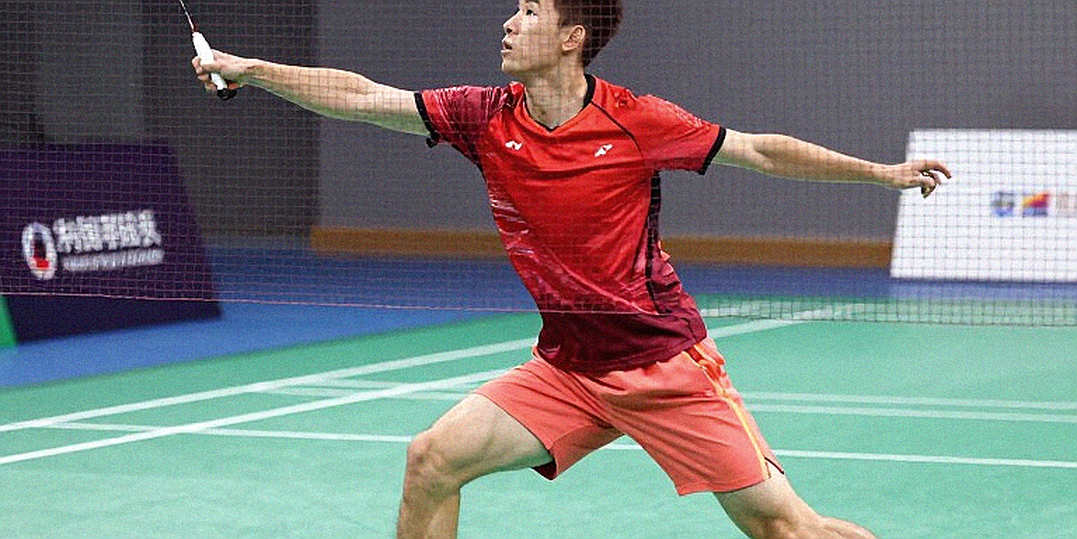
And here is the most interesting thing the data implies: what Xu does well is not only attacking. It is defending. She absorbed Thuy Linh's active pressure and endured long rallies until the exact moment she could explode into speed. A player who only hits fast and hard collapses when dragged into rallies. Xu did not collapse. She came back from 8-13 to 13-13 in game two — she stayed in the match while trailing.
#### The run of points: the true unit of measurement There is a way to read a match that I like, and it comes from my old profession. In athletics, people do not only measure total time; they measure split times. In badminton, the equivalent is the run of points: the stretches where one player wins several points in a row.
According to the description, Xu repeatedly closed gaps with four-point runs, and won the close points at the end of both games. Game one: from 14-16 down, she turned it into 17-21. Game two: from trailing, she built a run to lead 18-17 and eventually won 22-20. Those surges are her signature. Not the number of points scored overall, but where she puts them.
But I must state the limits. An average of four points per run is a signal, not proof. I have no data on rally length, smash speed, or unforced errors. I have scorelines, rankings, and a match description. With that, I will only say: Xu can explode into speed at the right moment. Whether she is a top-tier contender, I do not have enough data to claim.
#### Head-to-head: Two matches, two different conclusions | Matchup | Overall | Last 2 | Gap character | Counter dynamic | |---|---|---|---|---| | Xu Wen Jing vs Nguyen Thuy Linh | Xu leads 2-0 | 2-0 | Match 1: blowout (10-21, 10-21). Match 2: narrow loss (17-21, 20-22). | Possible stylistic counter: Xu's speed and power disrupt Thuy Linh's control. Medium confidence. |
What I want read from this table is not "2-0." It is "10-21, 10-21," then "17-21, 20-22." Two matches, two very different margins. Therefore, a "class gap" conclusion based on the first match is misleading. The second shows Thuy Linh can stay in the match, even lead, against the same opponent.

Had the second match come first, the media story would be entirely different. That tells me most of the noise around this result is an illusion of sequence.
### Contrarian angle: The shock was pre-built First, the number 40. No. 32 versus No. 72 looks like a large gap on paper, but world ranking in professional badminton is not a pure measure of class. It is a function of many variables: calendar, points defense, tournament selection, travel, and draw luck. In Xu's case, one variable I know: she just won a Super 100 without dropping a game, and beat a top-32 player twice in a row. Rankings update slower than form.
Second, the tier. A Super 100 is a development event. In development events, a young climber beating an older veteran not at peak is common everywhere. It happening in Vietnam does not make it a new law of badminton physics.
Third, and most counterintuitive: this loss says less about Thuy Linh than about Vietnamese badminton. Read the context of the same day: Nguyen Tien Minh, 43, also lost after qualifying. Two losses, two generations, one day.
The biggest problem is not that Thuy Linh lost to Xu Wen Jing. It is that when Thuy Linh and Tien Minh both lose, you look behind them and see... fairly empty.
In China, Xu illustrates something else: a former world junior champion, a World Tour title, two wins over a top-32 player. That is the shape of a generational handover, produced systematically. In Vietnam, that path seems to depend on unusually gifted individuals rather than a production line.
I say this not to belittle anyone. Thuy Linh has carried the national No. 1 position for years, a burden few understand. But precisely for that reason, turning a first-round loss into a story about her is the wrong question. The right question is: after all these years, why is there still no one behind her?
And here I must be careful of a professional temptation. I tend to see grand meaning in small data points. So I remind myself: return to the original data curve. The original data says Vietnam, in one day, lost both its men's and women's singles pillars. It does not say Vietnamese badminton has collapsed. It says the dependence on a few individuals has just been exposed.
### Tournament system: The truth about judging a Super 100 result Super 100 is the base tier. Two consequences, both important.
First, negative for symbolism: a Super 100 loss does not change the world order. Its significance is about ranking and morale more than status.
Second, positive for reading it correctly: because it is a base tier, it is where young players can gain experience and points. If Xu wins repeatedly at this tier, she can climb into the top 50 quickly, and then her opponent quality jumps. A comfortable Super 100 title cannot prove she can play at 750 or 1000 level. But it is a necessary step.
So when I say Xu is a rising player, I do not mean she is a big star. I am reading a very narrow data string, and I will repeat this in the risk section because it matters.
### Sports geopolitics: Two talent systems face each other On one side, a centralized model: China has a deep youth pipeline, many women's singles players in the world top 50, and former junior champions stepping onto the Tour as a natural progression. Xu's path is the shape of a current, not an isolated phenomenon.
On the other, a model resting on exceptional individuals: Vietnam owns outstanding players, but their number is thin. In men's singles, a 43-year-old still competing and still the most-mentioned name is a warning signal about generational handover. In women's singles, the dependence on Thuy Linh is similar.
When a lone player faces a current, they are not only fighting an opponent on court. They are fighting an entire foundation behind that opponent. That is why matches like the one at Nguyen Du often end the uncomfortable way they do: when individual talent meets a system, the system tends to win the final points, when long-term preparation surfaces.
### Coaching and support: A blank of information I must be honest: I do not have enough data. No information on coaching staff, physical conditioning, injury recovery, or technical analysis for either player. I raise this to emphasize that much of the real cause lies in what we cannot see: training intensity, quality of hitting partners, mental preparation for high-pressure points.
One thing I can say with medium confidence: Thuy Linh losing the final points in both meetings with Xu suggests a pattern worth taking seriously. Not as a fatal weakness, but as an area to invest in. In tennis, this is called the ability to win important points. It is not talent; it is a trainable skill, and trainable skills live behind the scenes, in the support engine.
### Risk analysis: The real worry is not the loss [Risk matrix as in the Vietnamese version: injury low, competitive medium, ranking medium, personnel structure high, public opinion medium, systemic low.]
Three takeaways. First, the highest-signal risk is not the loss itself but Thuy Linh losing the closing points twice in a row to a younger, lower-ranked opponent. Second, Vietnam's talent-pipeline risk is high, reinforced by a 43-year-old men's singles player also exiting. Third, Xu's injury and workload risk cannot be assessed.
And a reverse risk rarely mentioned: over-interpreting a young player's surge based on low-tier events. I was trained not to make this mistake, from the time I wrote about Marcell Jacobs before Tokyo 2026 — analyzing a little-noticed Italian's progression curve and comparing it to past surprise champions. I did not call Jacobs a gold-medal favorite. I said his curve was rising and worth watching. I keep that spirit here with Xu Wen Jing.
I do not chase records; I chase the rule hidden behind them. And the rule here is: young players climb fast at low tiers, but the jump from low tier to high tier is the hardest jump of a career.
### Media and expectations: The lifecycle of a story This story has a short lifecycle — perhaps a week in Vietnamese badminton media unless Xu goes deep or wins the event. That is reasonable, because the data base for a big story is not sufficient. A Super 100 title, two wins over a top-32 player, and two meetings with one opponent — that is not enough to declare a top-tier star.
But one aspect deserves discussion: calling this a "home shock" reflects reading ranking as class. It also reflects an expectation that the national No. 1 must always win at home. That expectation is emotionally real but statistically wrong. In individual sports, lower-ranked players beating higher-ranked players happens weekly. The only additions here are the national flag and the home applause.
And the home applause is a two-way psychological variable. It adds strength and pressure. I have no data to prove its effect on this match. I only note it as a variable to acknowledge.
### What I believe and what I do not yet believe What I believe: (1) Xu can create sudden bursts at key moments — a real tool, not luck. (2) Thuy Linh played a much better match than before, and the slip was at closing points, not in overall strategy. (3) The 32-versus-72 gap should not be read as a skill gap. (4) The more worrying issue than the loss is the personnel ceiling of Vietnamese badminton.
What I do not yet believe: (1) That Xu is a top-tier contender — the sample is too small and too low. (2) That Thuy Linh is in decline — no long career data, and two matches are two matches. (3) That Xu's style is an absolute counter — possible, needs more data. (4) That home pressure decided the result — speculation, not data.
### Why I still recorded this match I asked myself whether a long article about a Super 100 first round was warranted. My answer is yes, for a very specific reason. In my work, I get to watch big moments: Olympics, world championships, surprise champions, contested records. But I learned that the history of a sport is not written only in those moments. It is written on ordinary evenings, in second-tier arenas, in first-round matches whose results the world will not remember — but where we first see a player.
The match at Nguyen Du is such a match. It may end up as a small footnote, or as the starting point of a name we will see more. I do not know, and I will not pretend to.
But one thing I know for certain. When I reread two scorelines — 16-14 then 17-21; 17-14 then 20-22 — I read an uncomfortable truth about this sport: matches are not decided by who plays better for 80% of the time, but by who keeps the coolest head in the remaining 20%. And that 20% is not talent. It is a product of system, of habit, of thousands of hours designed to prepare for exactly those moments.
From spreadsheet to court, every forecast is a story not yet written. I will leave this one here, beside the scoreboard, as I always leave the numbers that refuse to sleep.
### What I want to carry forward If there is one forward-looking conclusion I draw from the night at Nguyen Du, it is not about Thuy Linh or Xu Wen Jing. It is a question Vietnamese badminton must answer in the coming years: do we want to keep walking on the feet of a few exceptional individuals, or do we want to build a current?
That question has no answer in a first-round match. But it has a signal. And the signal came on the exact night when both the longest-standing name and the current No. 1 left early.
As for Xu Wen Jing — I will watch her. Not because I believe she will win a world title. But because I want to know whether that run of points at Nguyen Du was the beginning of something, or a bright flash that fades. Data will answer, and data is never in a hurry.