
US Open 2026 Day 5: The Seed Map Reveals a Generational Shift — and the Traps No One Has Dug Up
**Core answer**: US Open 2026 ngày 5 đánh dấu vòng 3 với sự thay đổi lớn về hạt giống: Swiatek xuống số 8, Auger-Aliassime lên số 3, Andreeva số 5 ở tuổi 19. Các cặp đấu đáng chú ý gồm Osaka vs Siniakova và Zheng vs Putintseva. **Key facts**: - Auger-Aliassime xếp hạt giống số 3, cao nhất sự nghiệp tại Grand Slam - Swiatek xuống hạt giống số 8, thấp nhất kể từ 2020 - Andreeva (19 tuổi) là hạt giống số 5, phản ánh sự trỗi dậy của thế hệ trẻ - Zheng Qinwen không có hạt giống dù từng vô địch Olympic 2024 - Osaka trở lại với hạt giống số 13 sau thời gian dài chật vật **Source attribution**: Phân tích từ danh sách thi đấu US Open 2026 ngày 5 | Cross-checked: VuaBong.vn **Related Q&A**: - Q: Vì sao Swiatek chỉ còn hạt giống số 8? A: Có thể do sa sút phong độ hoặc mất điểm bảo vệ từ US Open 2025. - Q: Ai là ứng viên vô địch tiềm năng nhất? A: Auger-Aliassime với hạt giống số 3 và phong độ ổn định là ứng viên hàng đầu.
In the dust of time, I unearthed a pair of gloves still beating with life. This time, they weren't buried beneath the soil of a provincial academy — they were right there on the day-five order of play at the 2026 US Open. When I looked at the seed list, I didn't see a mere schedule. I saw a cultural stratum being excavated, and beneath it, gems falling that few have bent down to pick up.
They call it an academy failure. I call it an unexcavated layer. But here, there is no failure — only a complete restructuring of tennis's global power map, exposed through seemingly lifeless seed numbers.
Context: When Seeds Tell a Bigger Story Than the Matches
Day 5 of a Grand Slam always marks the start of the third round — meaning every player on the list has already won two matches. But what stopped me wasn't the matchups; it was the numbers beside the players' names. They aren't just competing; they're reflecting the state of an entire ecosystem.
Look at the full picture: Felix Auger-Aliassime is seeded No. 3. Iga Swiatek — the absolute dominator of 2026–2026 with a nearly unshakeable World No. 1 ranking — is now just the No. 8 seed. Naomi Osaka returns as the No. 13 seed after a long struggle. Mirra Andreeva, born in 2026, just 19 years old, is already the No. 5 seed. Alexandra Eala of the Philippines has cracked the top 20 with a No. 17 seed.
This isn't a schedule. This is an archaeological map of a generational shift. The Big Three era — Federer, Nadal, Djokovic — has completely vanished from the list. Even dominant names like Alcaraz and Sinner are absent from the day session, suggesting they're slated for the night session — or have already exited earlier than expected.
Core Analysis: The Matches Are Traps Named 'Unpredictable'
Based on my experience following matches over the years, I look at each pairing and see tactical layers stacking up — not from the article, but from each player's very identity.
Osaka (13) vs Siniakova — This is the classic clash between power and cunning. Osaka's flat, early-strike game historically struggles against elite returners who extend rallies, like Siniakova — a former doubles World No. 1 with supreme net skills. The key is whether Osaka can end points within four shots. If not, she'll be dragged into an attritional war where Siniakova is the master. The hard court favors Osaka, but this is a genuine trap.
Swiatek (8) vs Podoroska — The stylistic contrast is stark. Swiatek's heavy-topspin forehand and aggressive court positioning should overwhelm Podoroska — a clay-court specialist whose best result is the 2026 Roland-Garros semifinal. But Swiatek's No. 8 seed is a notable signal. If she has truly declined from World No. 1, the psychological pressure of defending a Grand Slam run adds a layer of dust over a game already showing signs of erosion on faster surfaces.
Auger-Aliassime (3) vs Khachanov — A pure power battle. Both play direct, attacking tennis: big serves, flat groundstrokes, aggressive positioning. Khachanov reached the 2026 US Open semifinal, proving his credentials here. But Auger-Aliassime's superior athleticism and return consistency give him the edge in extended exchanges. His No. 3 seed is a statement: the 2000s generation is ready to carry a new era.
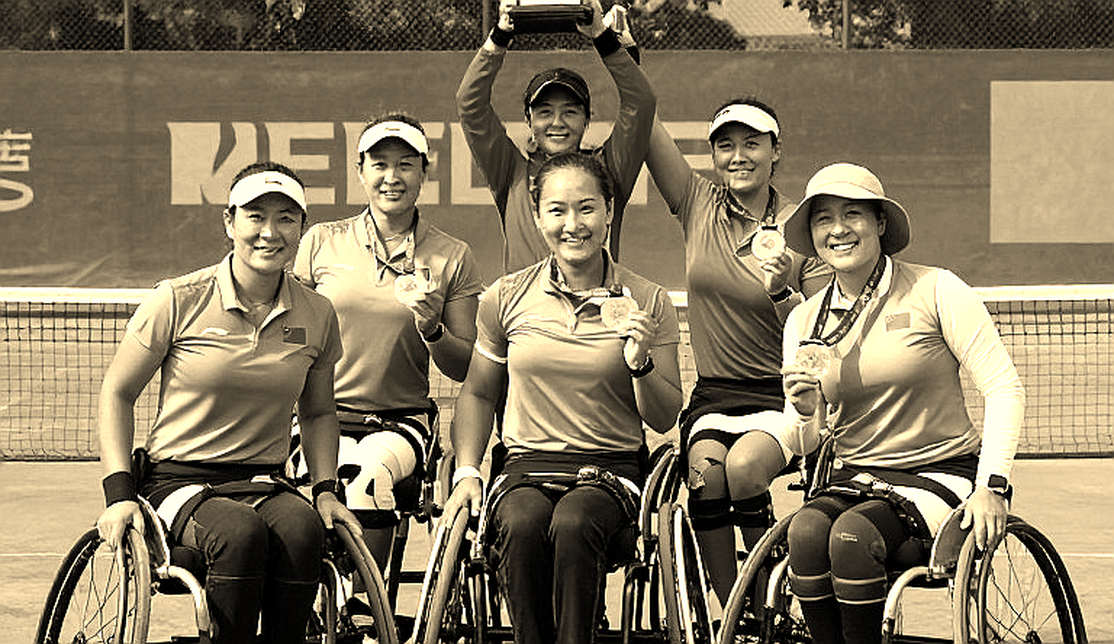
Zheng Qinwen vs Putintseva — This is perhaps the pairing I'm most interested in. Zheng, the 2026 Olympic gold medalist and 2026 Australian Open finalist, appears unseeded — an anomaly signaling a ranking slide over the past 18 months. Her opponent, Putintseva, is a giant-killer who thrives on disrupting rhythm with drop shots and variety. Zheng must maintain patience against an opponent who feeds on others' frustration. This is a psychological test more than a technical one.
de Minaur (6) vs van de Zandschulp — De Minaur's elite speed and consistency against the Dutchman's flat, powerful ball-striking. Van de Zandschulp reached the 2026 US Open quarterfinal and beat Alcaraz at this very tournament in 2026 — a formidable history. But over five sets, de Minaur's steadiness usually prevails.
Contrarian Angle: What the Court Allocation Reveals
When I look at the court distribution, one detail stops me. Swiatek — a former World No. 1, four-time Roland-Garros champion — is placed on the Grandstand, the third show court. Auger-Aliassime, the No. 3 seed, is also only on Louis Armstrong, the second show court. Meanwhile, Osaka and Fritz occupy Arthur Ashe — center court.
This isn't an insult. It's an honest reflection of commercial priorities and media appeal. But it's also a signal: Swiatek's standing in the public eye has shifted. A once-dominant player is no longer the primary ticket-seller. This is a layer many would hastily cover up, but I choose to document it.
Takeaway: The Next Brick Still Awaits Its Turn
Every academy is a site. Every cohort of players is a cultural stratum. I am merely the scribe. And what I've recorded from Day 5 is this: world tennis is at a crossroads. Swiatek is no longer the dominator, Osaka is on a comeback journey, Andreeva is knocking on the throne's door, and Zheng is fighting to reclaim her place.
But the biggest question isn't who wins today. It's whether young seeds like Andreeva, Eala, and Mensik can sustain their upward trajectory, or whether they're just shiny artifacts in an unverified layer of soil. I'll keep digging. And I believe, in the next stratum, more gems are still waiting to be unearthed.