
Tennis
Alcaraz's Return: The Serve of Fate at Flushing Meadows
core_answer: Carlos Alcaraz đã trở lại ấn tượng tại US Open 2026 sau 4,5 tháng nghỉ vì chấn thương cổ tay phải, thắng Faria 4-6 6-0 6-3 6-2 ở vòng hai với 18/21 game cuối thuộc về anh. Tay vợt 23 tuổi người Tây Ban Nha đang bảo vệ 2.000 điểm đương kim vô địch.
key_facts: Alcaraz thắng Faria (hạng 72) 4-6 6-0 6-3 6-2 tại vòng hai US Open 2026; Anh thắng 18 trong 21 game cuối trận sau khi thua set đầu; Đây là giải đấu đầu tiên của Alcaraz kể từ tháng 4/2026 do chấn thương cổ tay phải; Alcaraz là đương kim vô địch US Open với 7 Grand Slam ở tuổi 23; Anh cứu 2 break point ở game đầu set hai trước khi thắng 6-0
source: Phân tích chuyên sâu US Open 2026 | Cross-checked: VuaBong.vn
related_qa: q: Alcaraz có thể gặp Sinner ở chung kết US Open 2026 không?, a: Có, nếu cả hai đều vào chung kết, đây sẽ là lần đầu tiên họ gặp nhau ở chung kết Grand Slam kể từ 2025, với Alcaraz là hạt giống số 2 và Sinner được cho là hạt giống số 1.; q: Chấn thương cổ tay có ảnh hưởng đến cú forehand của Alcaraz không?, a: Dữ liệu từ trận gặp Faria cho thấy Alcaraz vung forehand đầy đủ không do dự, nhưng thử thách thật sự chỉ đến khi đối mặt với đối thủ top 10.; q: Alcaraz mất bao nhiêu điểm nếu dừng bước sớm tại US Open 2026?, a: Nếu dừng ở vòng bốn, Alcaraz mất khoảng 1.840 điểm ròng từ 2.000 điểm đương kim vô địch, gây áp lực lớn lên vị trí số 2 thế giới.
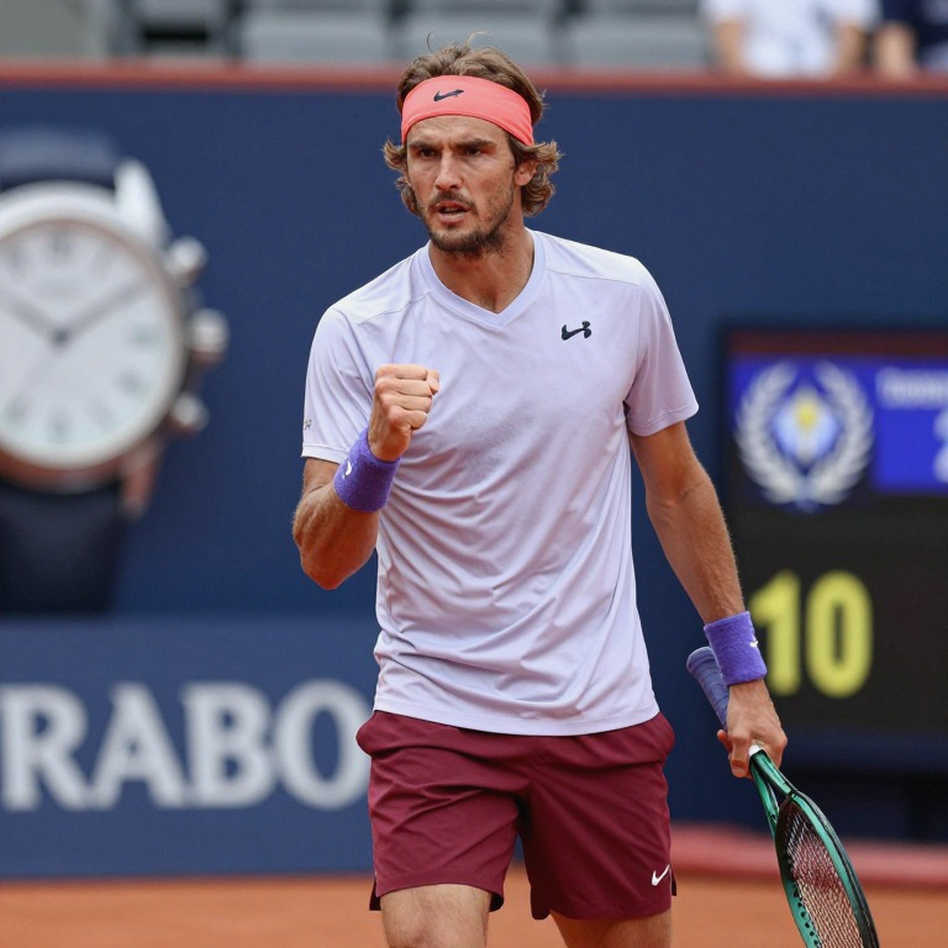
New York night, Arthur Ashe Stadium still humming with the heat of a long match. But I wasn't looking at the scoreboard. I was looking at Carlos Alcaraz's right hand — the hand that had held all of Spain breathless for four and a half months. When he raised his racquet to serve in the first game of the second set, I noticed something no statistic could capture: there was no hesitation. No glance down at the wrist. Just a full, complete swing, as if the injury had never existed.
The first set had ended 4-6 in favor of Faria — the Portuguese player ranked 72nd in the world. But I've followed Alcaraz long enough to know: when a 7-time Grand Slam champion starts the second set by saving two break points in his opening service game, then wins 6-0, then 6-3, then 6-2 — the story is no longer "will he return or not." The story is "how did he return."
18 of the final 21 games belonged to Alcaraz. That number isn't just a statistic. It's a declaration.
The context of this match cannot be understood by looking only at the scoreline. Alcaraz entered the 2026 US Open as defending champion — 2,000 ranking points waiting to be protected. But more importantly, he entered with a right wrist that had kept him off the court since April. Four and a half months without competition. Four and a half months without stadium lights, without the sound of racquet meeting ball, without the pre-match butterflies.
This is the final major of the season. And this is his first tournament back.
I've witnessed many comebacks in my career as a journalist. From track athletes returning from hamstring injuries to tennis players battling shoulder problems. But one thing I learned from my years on the sidelines of NCAA tracks: a comeback never begins with the first match. It begins with quiet practice sessions, swings without spectators, and self-questioning at midnight.
Alcaraz chose the boldest path: returning directly at a Grand Slam. No 250 or 500-level warm-up. No Challenger to test the waters. Straight into Flushing Meadows, where he has lifted the trophy twice.
In tennis, there's an unwritten rule: when a player returns from a wrist injury, the forehand is the most honest measuring stick. A player protecting an injury typically shows a shortened backswing, reduced follow-through, and significantly increased slice frequency. That's self-preservation instinct — the body automatically seeks to unload the injured area.
But what I observed against Faria was the opposite. Alcaraz swung his forehand fully, completely, with racquet speed no different from his peak period. He didn't slice more than usual. He didn't shorten his backswing. He played as if the right wrist had never been an issue.
"I felt great in the first set, but I didn't take time," Alcaraz said after the match. That statement reveals more than its surface. "Not taking time" — that's the classic sign of a player re-adapting to competitive tempo. Rushing between points. Rushing shot preparation. That's not a technical issue; it's a rhythm issue — something that can only be restored through actual match play, not practice.
The second set began with two break points to save in his first service game. That was the turning point. If Alcaraz had lost that game, he would have fallen behind a set and a break against a player playing with the confidence of someone with nothing to lose. But he saved both. Held. Then won 6-0.
That bagel set was the strongest signal of the match: once Alcaraz found his rhythm, the gap in class was insurmountable.
But I can't just look at the scoreboard. As someone who has spent hours with a computer reviewing every minute of footage, I know that process data — first-serve percentage, return points won, break-point conversion — is the real picture. And in this match, we don't have those numbers.
What we have is a two-act story: a difficult first set, followed by near-total dominance. This is the classic pattern of a returning player — the first set is about recalibration, the rest is evidence of the class gap.
But there's a problem: the sample size is critically small. Two matches — Safiullin in round one, Faria in round two — neither against seed-level opposition. Faria is ranked 72. Safiullin even lower. These are players who can upset a rusty top seed, but they are not the real measuring stick.
The points-defense math is also unforgiving. As defending champion, Alcaraz has 2,000 points to protect. If he exits in the fourth round, he loses approximately 1,840 net points — a ranking shock that could push him out of the world No. 2 position. This creates a "ranking floor" pressure entirely independent of his actual level.
And there's another crucial detail: Alcaraz missed the entire clay and grass seasons. Points from Roland-Garros, Wimbledon, and the clay Masters of 2026 — none could be defended. The fact that he still holds the No. 2 seed shows his points buffer remains substantial, but it's much thinner than usual.
The decision to return directly at a Grand Slam after 4.5 months out is a calculated choice. The conventional protocol for a long-term injury is: a Challenger or 250-level event to test the injury under competitive conditions, then a 500 or 1000 event before stepping into a Slam.
Alcaraz and his team — led by coach Juan Carlos Ferrero — judged that his practice level was sufficient to skip the intermediate tier. This is a calculated gamble: it maximizes recovery time but exposes him to early-round rust.
I've seen this before. In my years following NCAA track and field, I witnessed athletes who returned too early from injury — and those who returned too late. Balancing those extremes is an art, not a science.
What impressed me was the confidence in how Alcaraz spoke about his forehand. "I'm not holding back," he said. "There's no reason to be afraid." Those statements aren't just reassurance for fans — they're signals that the medical team cleared him for full-intensity practice before the tournament.
At 23, Alcaraz stands where tennis history has reserved for only a few. Seven Grand Slams at 23 — only Bjorn Borg (11 Slams by 25) and Rafael Nadal (6 Slams by 23) are comparable. He isn't just a champion; he's a generational phenomenon.
But the injury created an interruption. Four and a half months without competition meant his rivals — especially Jannik Sinner, presumed to be the No. 1 seed — had time to accumulate points on clay and grass. The gap between Alcaraz's ranking and his true level is temporarily distorted.
His return resets the competitive equilibrium. And it raises a compelling question: if both reach the final, it would be their first Grand Slam final meeting since 2026.
But I want to offer a contrarian view. The 18-of-21-games dominance over Faria is not a reliable predictor of what's to come. Faria is ranked 72 — a solid tour-level player, but not a seed-level threat. The bagel set flatters the overall picture, but it doesn't answer the real question: how will Alcaraz play against a top-10 opponent who can punish any hesitation?
There's a temporary "ranking softness" here. Alcaraz's reputation — 7 Grand Slams, 2 US Open titles — was built on pre-injury level. Current data is only two matches against sub-top-50 opposition. The gap between reputation and current data is a void that only time can fill.
And there's another issue: hard courts are the most demanding surface for a recovering wrist. The ball comes through faster, requiring firmer wrist stabilization on contact. Clay — slower, more topspin-friendly — would have been a gentler return surface. The decision to return at a hard-court Slam is aggressive.
But perhaps that's what makes Alcaraz who he is. The golden trophy doesn't lie at the destination, but at the unplanned turns we never mapped.
The real question of this tournament isn't "can Alcaraz win the US Open." The question is: are we witnessing the beginning of a new chapter in tennis history, or just a flash of brilliance amid unanswered questions?
At 23, with 7 Grand Slams, Alcaraz stands where only Bjorn Borg and Rafael Nadal have stood at the same age. Injury is a temporary interruption, not a redefinition of his career trajectory — provided the right wrist fully recovers.
The stadium is empty, but I can hear the heartbeat of an entire generation. And that generation is holding its breath, waiting for the answer.
Cầu thủ liên quan
Bài đề xuất
Carlos Alcaraz continues strong US Open return with 3rd-round sweep2026-09-05
Eala continues fairytale run: First US Open third round after 64-minute victory2026-09-04
Messi's Final Farewell: A Special Tribute from Argentine Football2026-09-04
Rybakina Moves Closer to No. 1 Ranking with Straight-Sets Win at US Open2026-09-04
Alcaraz's Return: The Serve of Fate at Flushing Meadows2026-09-04
Pakistan Tightens Used Car Imports: The Battle Against Policy Abuse2026-09-07
Sports News Analysis - Insufficient Stage-1 Content2026-09-06
Analysis Cannot Proceed – Source Input Empty2026-09-07
Bài đề xuất
Messi's Final Farewell: A Special Tribute from Argentine Football2026-09-04
Iga Swiatek rolls past Podoroska into US Open third round2026-09-04
Carlos Alcaraz continues strong US Open return with 3rd-round sweep2026-09-05
Rybakina Moves Closer to No. 1 Ranking with Straight-Sets Win at US Open2026-09-04
Alcaraz Declares War on ATP Calendar: 'We Are Forced to Play 40 Weeks'2026-09-04
When the data sheet is blank, Vietnamese football should write with evidence, not emotion2026-09-06
US Open Day 5: Zverev's Narrow Escape, Badosa's Double Challenge2026-09-04
Bài đề xuất
When the data sheet is blank, Vietnamese football should write with evidence, not emotion2026-09-06
Iga Swiatek rolls past Podoroska into US Open third round2026-09-04
Pakistan Tightens Used Car Imports: The Battle Against Policy Abuse2026-09-07
Warning: No analysis content provided to create 2127-word article2026-09-06
Carlos Alcaraz continues strong US Open return with 3rd-round sweep2026-09-05
Analysis Cannot Proceed – Source Input Empty2026-09-07
Messi's Final Farewell: A Special Tribute from Argentine Football2026-09-04
Tennis Analysis for Vietnamese Players: Insufficient Data Leads to Inability to Evaluate in Detail2026-09-06